
Resources
We developed a suite of evidence-based resources and educational tools designed to support person-centred care for older adults and to translate ageing research into clinical practice.
Towards Organisational Culture Change (TOrCCh)
With aged care facilities across Australia attempting to respond to policy and practice changes, our researchers have developed the TOrCCh resource toolkit to assist aged care facilities to implement long-lasting organisational change.
TOrCCh Leaders Workbook (PDF 749 KB)
TOrCCh Members Workbook (PDF 741 KB)

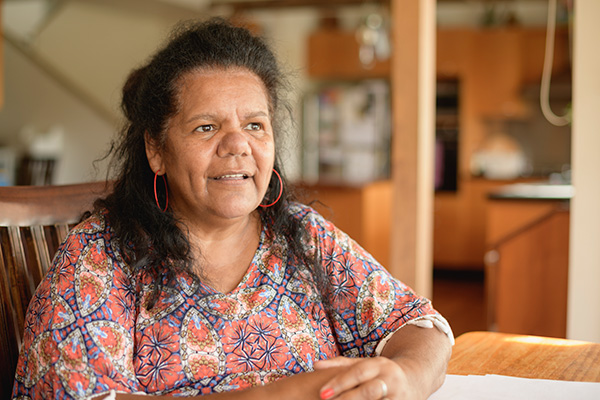
Kimberley Indigenous Cognitive Assessment (KICA)
The KICA was developed in response to the need for a cognitive screening tool for older Indigenous Australians (aged 45 years and older) living in rural and remote areas.
e-Ageing
e-Ageing is an educational resource on the ageing process and age-related conditions for medical and allied health students and professionals. It covers common health issues experienced by older people and aims to promote positive attitudes towards ageing and the care of older adults.


Deprescribing Guidelines
Deprescribing.com brings together clinical practice guidelines for deprescribing in older people — the process of reducing or stopping medicines when they may no longer be needed, or where the risks of continuing outweigh the benefits. The website provides practical, evidence-based guidance to support clinicians in reviewing long-term medications and having deprescribing conversations with patients and families.
The guideline summary is available here:
Australian Potentially Inappropriate Medicines List
The Australian Potentially Inappropriate Medicines (PIMS) List was published in the Internal Medicine Journal. The Australian PIMS list has two components, the main PIMS list and those that are only PIMs in certain conditions or scenarios.
The resource can be downloaded here:
The published paper is available here:
Wang et al. Development of a list of Australian potentially inappropriate medicines using the Delphi technique. Internal medicine journal, 2024; 54(6):980–1002.


MATCH-D
MATCH-D, the Medication Appropriateness Tool for Comorbid Health conditions during Dementia, is a free, evidence-based resource developed by researchers at the WA Centre for Health and Ageing (WACHA) and collaborators at the University of Sydney.
It guides clinicians, carers, and consumers through the medication review process for people living with dementia, with tailored recommendations for early, mid, and late stages of the condition. The website offers downloadable criteria, printable checklists for each stage, and guidance covering preventative medications, symptom management, psychoactive medications, treatment goals, and medication reviews.
ERASE and CEASE tools
Deprescribing — the CEASE framework (dRx™)
Deprescribing is the supervised withdrawal of inappropriate medicines to manage polypharmacy and improve outcomes for older adults.
The CEASE framework (Current medicines, Elevated risk, Assess, Sort, Eliminate) is a practical, step-by-step approach clinicians can use to identify, prioritise, and safely discontinue medicines that are no longer providing benefit.
Undiagnosing — the ERASE framework
Over-diagnosis can drive over-intervention and over-prescribing in older adults, with diagnostic labels often outlasting the conditions they describe.
The ERASE framework (Evaluate, Resolved conditions, Ageing normally, Select targets, Eliminate) helps clinicians review diagnostic labels and remove those that are unnecessary or no longer beneficial, supporting safer prescribing and better-targeted care.


DIRECT
DIRECT is a free dementia education package developed by the WA Centre for Health and Ageing (WACHA) at the University of Western Australia. It is designed to improve the care of people with dementia living in residential aged care facilities (RACFs) by strengthening both the clinical skills of the people who look after them and the systems through which GPs and RACFs work together.
Depth of Field
Exploring Ageing is an innovative, consumer driven, reflective learning resource for health professional students that uses documentary style photographs and audio-narrated film of 14 WA older people. The resource aims to stimulate in-depth discussions, surface unexplored stereotypes and challenge current and future health professionals through reflection to consider new perspectives around ageing that move ‘beyond diagnosis’ to a more humanistic model of care for older people. Selected Depth of Field: Exploring Ageing artefacts are available by hovering over the third portrait at https://www.virtualempathymuseum.com.au/digital-storytelling-room/
An artefact from Depth of Field : exploring Stroke Recovery (‘John’s Story’) is available by hovering over the first portrait at https://www.virtualempathymuseum.com.au/digital-storytelling-room/. In addition, a collection of photographs and quotes of four WA stroke patients and their families as they account the honest and raw reality of what life is really like following a stroke was published as part of the Depth of Field: Exploring Stroke Recovery project.
Delirium Simulation Program
This Delirium Simulation provides an overview of managing delirium, particularly in a hospital setting.
Advice on providing excellent healthcare to Aboriginal and Torres Strait Islander people in mainstream services
Hear from Professor Leon Flicker and Ms Roslyn Malay on lessons learned on how to deliver the best health services for Aboriginal and Torres Strait Islander people.
The 2021 Dick Lefroy Oration
Hear from Professor Leon Flicker and Ms Roslyn Malay on lessons learned on how to deliver the best health services for Aboriginal and Torres Strait Islander people.